

How Do I Know If My Roof Needs Repair in Washington, IL?
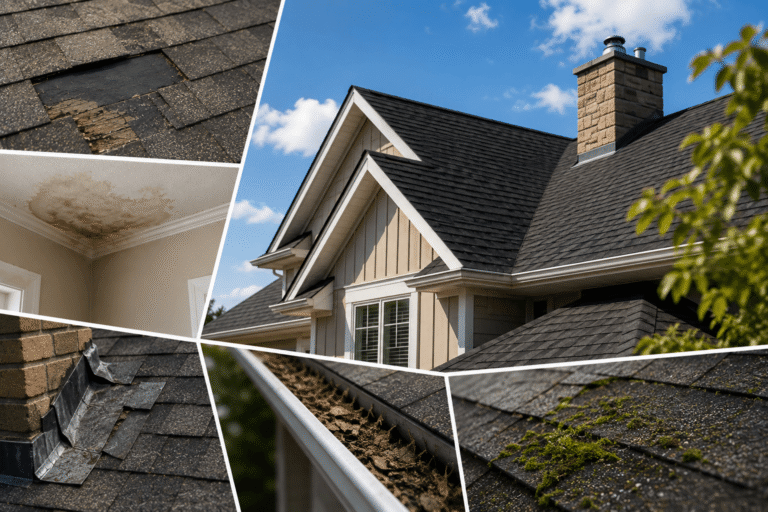
You may need roof repair if you notice missing shingles, water stains, damaged flashing, sagging areas, granules in your gutters or other changes in your roof’s condition. Some roofing problems are easy to see, while others develop underneath the shingles and may not become obvious until water enters the home.
For homeowners and property managers in Washington, IL, recognizing these warning signs early can help prevent a small roofing problem from turning into a larger repair involving the attic, insulation, decking or interior walls.
Missing or Damaged Shingles Are an Early Warning Sign
Shingles are the first layer of defense against rain, wind and other weather. When shingles become damaged or disappear, the roofing system can become vulnerable to moisture.
A few damaged shingles do not necessarily mean the entire roof needs to be replaced. In many cases, an isolated problem can be addressed with a targeted repair.
Look for Missing Shingles
Walk around your property after strong winds and look for roofing materials in the yard.
Missing shingles are particularly common after severe weather. Wind can lift the edges of shingles or remove them completely.
You may also notice exposed areas where the underlying roofing material is visible.
If shingles are missing, it is better to have the area inspected instead of waiting for a leak to appear.
Watch for Cracked or Broken Shingles
Shingles can crack because of weather exposure, age or impact.
Individual cracks may be repairable, but widespread cracking can indicate that the roofing material is becoming less reliable.
Other visual signs include:
- Broken corners
- Lifted edges
- Split shingles
- Loose sections
- Curling
- Buckling
- Bare areas where granules are missing
The number and location of damaged shingles matter when determining whether a repair is appropriate.
Water Stains Can Mean Your Roof Is Already Leaking
One of the clearest reasons to have a roof checked is water appearing inside the house.
A ceiling stain may look like an interior maintenance problem, but the source could be above the ceiling.
Water can move through roofing materials and framing before it becomes visible inside the home. This means the location of a stain is not always directly below the roof defect.
Common Interior Warning Signs
Check for:
- Brown or yellow ceiling stains
- Peeling paint
- Damp drywall
- Musty smells
- Wet attic insulation
- Dark marks on attic wood
- Dripping during rainfall
- Moisture around vents or other roof penetrations
A small stain should not automatically be ignored.
If it appears after rain or becomes darker during wet weather, there may be an active roofing problem.
Check the Attic When It Is Safe
The attic can provide additional clues.
Look for signs of moisture around the underside of the roof decking and framing.
You may see water marks, damp insulation or areas of discoloration.
However, homeowners should not walk across unsupported attic areas or attempt an unsafe roof inspection themselves.
If there is significant moisture, structural damage or active leaking, contact a roofing professional.
READY ROOF provides professional roof repair services for homeowners dealing with leaks, damaged shingles and other roofing problems. You can learn more about the company’s roof repair services in Washington, IL.
Damaged Flashing Can Lead to Hidden Problems
Flashing is installed around areas where the roof meets another structure or changes direction.
Common locations include:
- Chimneys
- Skylights
- Walls
- Valleys
- Vents
- Other roof penetrations
These areas require careful waterproofing because they create additional points where water can potentially enter.
What Does Damaged Flashing Look Like?
From the ground, flashing problems may be difficult to identify.
Possible warning signs include:
- Loose metal
- Bent flashing
- Gaps
- Missing sections
- Cracked sealant
- Water stains near chimneys
- Repeated leaks in the same location
If a leak keeps returning even after a previous repair, the source may be related to flashing or another nearby roof component.
Why Flashing Problems Should Be Addressed
A small opening around flashing can allow water into the roofing system repeatedly.
Over time, moisture can affect underlayment, decking and insulation.
A professional inspection can determine whether the flashing can be repaired or whether surrounding materials also need attention.
Granules in Your Gutters Can Tell You Something
After rain, homeowners sometimes notice small particles collecting inside their gutters.
A limited amount of granule loss can occur naturally, especially as roofing materials age. However, a significant increase can be a reason to have the roof evaluated.
What Are Shingle Granules?
Asphalt shingles are covered with small protective granules.
These granules help shield the roofing material from sunlight and weather exposure.
When large areas begin losing granules, the shingles may become more vulnerable to deterioration.
Look for:
- Heavy granule buildup
- Bare-looking sections of shingles
- Areas with noticeably different texture
- Increased granules after storms
Granule loss by itself does not determine whether a roof needs repair, but it can be useful when considered alongside other signs.
Sagging Areas Should Never Be Ignored
A roof that appears to sag or dip may have a problem beneath the visible roofing materials.
Sagging can be associated with moisture damage, compromised decking or other structural concerns.
This is different from ordinary shingle wear.
What to Look For
From the ground, look for:
- A visible dip in the roofline
- Uneven sections
- Areas that appear lower than surrounding surfaces
- A change in the roof’s shape
If you notice significant sagging, do not climb onto the roof to investigate.
A professional should evaluate the area and determine whether the issue involves the decking or another part of the roofing structure.
Storm Damage Can Happen Even Without an Immediate Leak
Washington, IL, homeowners should pay close attention to their roofs after strong storms.
Wind and hail can damage roofing materials without immediately allowing water into the home.
Wind Damage
Strong winds may:
- Remove shingles
- Lift shingle edges
- Damage flashing
- Expose underlying materials
- Move roofing debris
Hail Damage
Hail can leave impact marks on shingles and other exterior components.
Some damage may not be obvious from ground level.
If a significant storm has passed through Washington, inspecting the roof from a safe position and arranging a professional assessment can help determine whether repairs are needed.
READY ROOF also provides storm restoration services for properties affected by severe weather.
Does a Dirty Roof Mean It Needs Repair?
Not necessarily.
Dark streaks, algae, moss and accumulated debris can make a roof look older than it actually is.
However, homeowners should be careful about trying to solve the problem with pressure washing.
Pressure Washing Can Damage Roofing Materials
Pressure washing is commonly used for exterior surfaces such as concrete driveways, patios and some masonry.
Asphalt shingles are different.
High-pressure water can loosen protective granules, damage shingles and potentially shorten the life of the roofing material.
For example, a homeowner might safely use an appropriate pressure-washing method on a concrete driveway but use entirely different cleaning practices around an asphalt shingle roof.
Cleaning Does Not Repair Roof Damage
If a roof has missing shingles, failed flashing or a leak, cleaning will not correct the underlying issue.
The roof should be evaluated before aggressive cleaning is attempted.
If the roof is simply dirty, the appropriate cleaning method should be selected based on the roofing material and its condition.
When Should You Contact a Roofing Contractor?
You do not have to wait until water is dripping through your ceiling before requesting an inspection.
Consider having the roof evaluated if you notice:
- Missing shingles
- Cracked shingles
- Repeated leaks
- Ceiling stains
- Damaged flashing
- Significant granule loss
- Sagging
- Storm damage
- Exposed roofing materials
- Recurring moisture problems
A professional inspection can determine whether the issue requires a small repair, more extensive work or simply continued monitoring.
READY ROOF’s dedicated roof repair service covers common problems such as roof leaks, shingle replacement, flashing repairs, gutter-related issues and storm damage.
Getting the problem evaluated early can also help prevent water from reaching materials beneath the roof.
How to Decide Whether Your Roof Needs Immediate Attention
Not every roofing issue requires an emergency response, but some problems should not be delayed.
Usually Worth Prompt Evaluation
These include:
- Active leaks
- Missing sections of roofing
- Significant storm damage
- Exposed underlayment
- Sagging
- Water entering the attic
- Extensive flashing damage
Issues That Still Deserve Monitoring
Other conditions may be less urgent but should still be documented.
These can include:
- Minor discoloration
- Limited surface wear
- Small amounts of granules in gutters
- Isolated cosmetic changes
The key is to watch for changes.
A roof that is deteriorating quickly deserves more attention than one showing gradual, normal aging.
What Happens During a Roof Repair Evaluation?
A roofing professional will generally begin by identifying the visible symptoms and determining where the damage is located.
The evaluation may consider:
- Roofing material
- Shingle condition
- Flashing
- Roof penetrations
- Valleys
- Drainage
- Visible moisture
- Roof decking concerns
- Storm-related damage
The goal is to determine the cause rather than simply treating the most obvious symptom.
For example, replacing a stained ceiling without addressing the roof will not stop the water intrusion.
Likewise, replacing one shingle may not resolve a leak caused by failed flashing nearby.
A proper evaluation helps connect the visible problem with its source.
How Washington Homeowners Can Stay Ahead of Roof Problems
Regular property checks can help homeowners notice changes before they become major concerns.
After severe weather, inspect the property from the ground for missing materials and debris.
Keep gutters clear so rainwater can move away from the roof properly.
Watch the attic and ceilings for signs of moisture.
Avoid unnecessary foot traffic on the roof.
And when exterior cleaning is needed, make sure the cleaning method is suitable for the surface.
Roof maintenance is especially important for older properties and homes that have experienced previous leaks.
If you notice a roofing problem and need professional assistance, READY ROOF provides roof repair services for Washington, IL, homeowners.
For additional company information and current roofing services, visit READY ROOF Inc..
Frequently Asked Questions
A: Common warning signs include missing or damaged shingles, water stains, recurring leaks, damaged flashing, sagging areas, significant granule loss and visible storm damage. A professional inspection can determine the cause and severity.
A: Yes. Missing shingles, hail impacts, loose flashing, exposed roofing materials and other damage can exist before water enters the home.
A: High-pressure washing can damage asphalt shingles and remove protective granules. Homeowners should use a cleaning method appropriate for the roofing material rather than treating the roof like a concrete driveway.